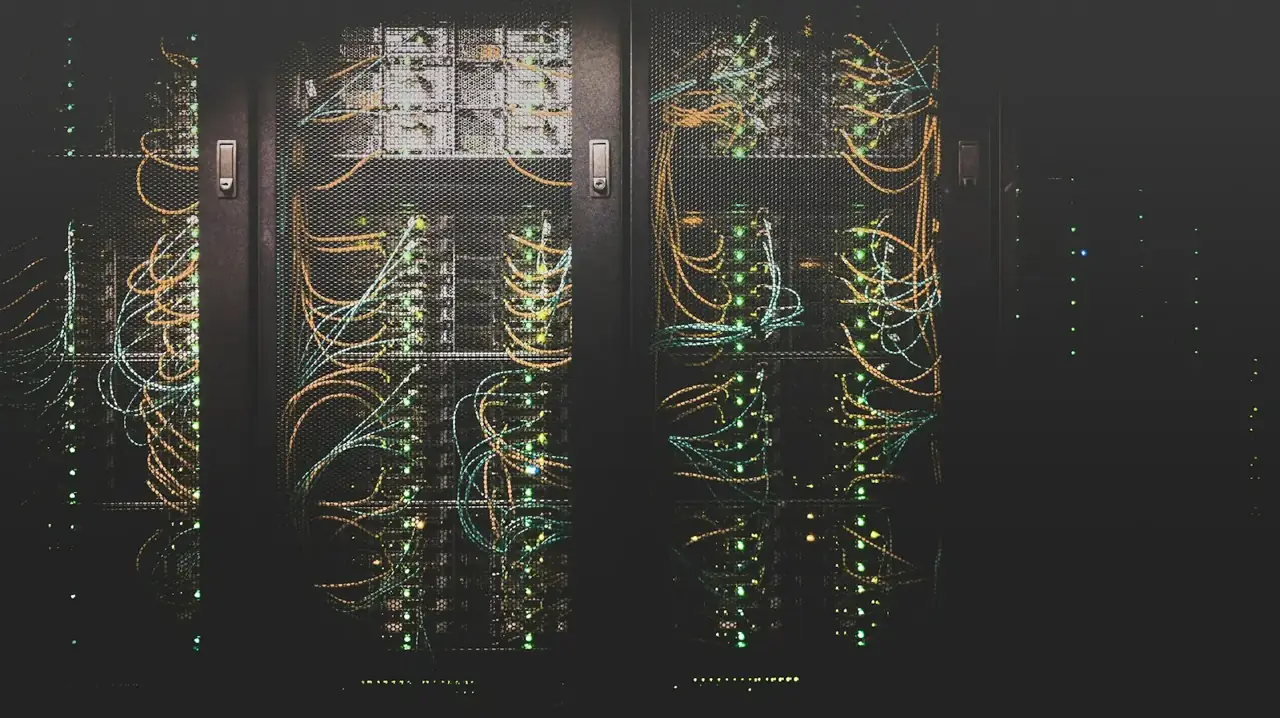
Deploying an on-premise AI voice agent is a different project from switching on a cloud voice bot. You are installing speech recognition, language understanding, agent orchestration and speech synthesis inside your own network, wiring them into your telephony and your business systems, and taking responsibility for their security. In exchange, no customer audio, transcript or CRM lookup ever leaves your infrastructure, which is the property that gets voice AI approved in European banks, insurers, telecom operators and hospitals.
This guide is written for the IT, security and contact-center teams that have to make that deployment happen. It covers a reference architecture, the deployment phases in order, the security hardening that a CISO will expect, a GDPR go-live checklist and the mistakes that most often delay projects.
Reference Architecture for a Self-Hosted Voice Agent
Every self-hosted voice AI deployment is built from the same functional blocks. Understanding them makes sizing, security and integration discussions concrete.
- Telephony entry point. Calls arrive through your existing PBX, IP PBX or VoIP platform over a SIP trunk. The voice agent registers as an endpoint or receives calls through a media gateway, exactly like a human agent's softphone would.
- Media handling. A media server terminates the audio stream, handles codecs and provides real-time audio to the speech layer, with recording where policy requires it.
- Speech recognition (ASR). Streaming transcription in the caller's language, running on your servers with no outbound API calls. Language coverage and accuracy here determine everything downstream.
- Understanding and orchestration. The agentic layer identifies intent, maintains conversation context, decides which business action to take, calls the relevant system and determines when to escalate. Business rules, allowed actions and escalation policies live here.
- Integration layer. Secure API connectors to CRM, ERP, reservation, ticketing and identity-verification systems, using service accounts with least privilege.
- Speech synthesis (TTS). Natural-sounding responses generated locally, with the AI disclosure and recording notice built into the greeting.
- Redaction and logging. Personal data such as national ID numbers, IBANs and card numbers is masked in transcripts and logs at the moment it is recognized, before storage.
- Observability and analytics. Metrics, traces and audit logs feed your monitoring stack; conversations feed the same speech analytics that scores your human agents.
All of these components can run in a single on-premise cluster, in a private-cloud tenant inside the EU, or in a segmented network with no internet route. The architecture is the same; only the hosting changes. For the strategic comparison, see on-premise versus cloud AI for contact centers.
Key takeaway
The voice agent is one more endpoint on your telephony platform and one more client of your business systems. Treat it with the same integration discipline as any other, and most of the "AI" questions turn into familiar infrastructure questions.
Deployment Phases, in Order
Phase 1: Discovery and DPIA
Select the first use cases by call volume and clarity: appointment scheduling, order and delivery inquiries, customer verification and first-line technical support are typical. For each, define what the agent may do autonomously and what it must hand over. Start the data protection impact assessment now, with the DPO, information security and, where applicable, employee representatives. The data-flow diagram from the reference architecture above is the core of it.
Phase 2: Network and telephony integration
Provision the cluster in a dedicated network segment. Establish the SIP trunk or endpoint registration with your PBX, agree codecs, test call routing and transfers to human queues, and confirm that recordings and metadata land where your retention policy expects. Verify that no component attempts outbound internet connections; in an air-gapped design, plan how model and software updates will be delivered through a controlled channel.
Phase 3: Model setup and language coverage
Install and validate the speech and language models for every language your customers use. Measure transcription accuracy on your own recordings, by language and by channel, because accuracy drives both the customer experience and the reliability of redaction. Tune vocabulary for product names, locations and domain terms.
Phase 4: Business rules, integrations and escalation design
Connect the integration layer to CRM, ERP and reservation systems using dedicated service accounts with the minimum permissions each flow needs. Encode the agent's mandate: which transactions it completes, which it confirms with the caller, and which trigger a warm transfer to a human with the full conversation context attached. Design the opening statement: AI disclosure, recording notice, and how to reach a person.
Phase 5: Security hardening
Covered in detail in the next section. It runs in parallel with phases 2 to 4 and must be complete before real customer calls.
Phase 6: Pilot with real calls
Route a limited share of calls for the selected use cases to the agent, with human agents monitoring and able to take over. Review transcripts (redacted) daily, measure task completion, escalation rate and caller sentiment, and feed the findings back into rules and vocabulary. The pilot is also where the DPIA's residual risks get their first real evidence.
Phase 7: Go-live and continuous monitoring
Increase traffic in steps, extend to further use cases, and keep the agent's conversations under the same quality and compliance analytics as your human team. Schedule model updates, review access logs and revisit the DPIA when scope changes.
Security Hardening for an On-Premise Conversational AI Deployment
An on-premise conversational AI deployment inherits your security controls; it also needs some of its own. The following list reflects what security reviews in regulated European organizations typically require.
| Control | What to implement | GDPR link |
|---|---|---|
| Encryption in transit | TLS for all API traffic; SRTP for media where the PBX supports it | Art. 32 |
| Encryption at rest | Encrypted volumes for recordings, transcripts, logs and backups, with keys in your own key management | Art. 32 |
| Network segmentation | Dedicated segment; allow-listed connections to PBX and business systems only; optional air gap | Art. 25, 32 |
| Identity and access | Integration with your identity provider; role-based access; MFA for administrators | Art. 32 |
| Secrets management | Service-account credentials in a vault, rotated; no secrets in configuration files | Art. 32 |
| Redaction at source | PII masked in transcripts and logs before storage; audio redaction where recordings are kept | Art. 5, 25 |
| Audit logging | Immutable logs of administrative actions, access to conversations and integration calls | Art. 5(2), 30 |
| Retention enforcement | Automated deletion per call type, propagated to backups | Art. 5 |
| Patching and updates | Defined process for OS, platform and model updates, including for disconnected environments | Art. 32 |
| Resilience | Redundant nodes, tested failover to human queues, capacity for peak concurrency | Art. 32 |
GDPR Go-Live Checklist
Before the first production call, confirm each item with the DPO. This is the DPIA for voice AI turned into a release gate.
- Transparency (Art. 13; EU AI Act Art. 50): the greeting states that the caller is speaking with an AI, that the call is recorded and processed, and how to reach a human; the full privacy notice is published.
- Lawful basis (Art. 6): documented per use case; outbound calls respect consent and marketing preferences.
- Automated decisions (Art. 22): the agent's mandate excludes decisions with legal or similarly significant effects; escalation paths are tested.
- Data minimization and privacy by design (Art. 5, 25): task-scoped data access; redaction at source; retention configured per call type.
- Records of processing (Art. 30): the voice agent and its data flows are entered in the register.
- Security (Art. 32): hardening table completed; penetration test or security review performed.
- DPIA (Art. 35): completed, residual risks accepted, review triggers defined.
- Data subject rights (Art. 15 to 17): a procedure exists to locate, export and delete a caller's conversations.
- Breach readiness (Art. 33, 34): the voice agent is in the incident response plan; 72-hour notification path is known.
- Processors (Art. 28): confirmed that no third party processes personal data in production; support access is contractually bounded and logged.
The wider legal context, from lawful basis to the AI Act, is covered in our guide to GDPR-compliant AI voice agents.
Common Pitfalls
- Discovering hidden cloud dependencies late. A platform marketed as on-premise that quietly calls an external API for transcription or language understanding breaks the entire compliance story. Verify network behavior during evaluation, not after contract signature.
- Under-sizing for concurrency. Voice agents remove queues only if the cluster can handle peak simultaneous calls. Size for your busiest hour, and test failover to human queues.
- Skipping accuracy measurement per language. A model that performs well in one language and poorly in another produces frustrated callers and unreliable redaction.
- Vague mandates. If nobody has written down what the agent may decide, Article 22 problems and customer complaints follow.
- Treating the DPIA as paperwork. Projects that involve the DPO from discovery go live faster than projects that ask for approval at the end.
- Forgetting the works council. A voice agent changes how human agents work and how their calls are analyzed. Consult early where co-determination applies.
How Intalkive Voice Assistant Deploys Inside Your Infrastructure
The Intalkive Voice Assistant (Agentic AI) is delivered as a complete on-premise stack: speech recognition, agentic orchestration, integration layer, speech synthesis, redaction and analytics, running on your servers or in your EU private cloud, with a hosted option for organizations that prefer it. It connects to your existing PBX, IP PBX or VoIP platform and to your CRM, ERP and reservation systems via API, understands callers in more than 80 languages, completes tasks such as appointment scheduling, order and delivery inquiries and customer verification end to end, and escalates to a human with full context when a case falls outside its mandate. Personal data is masked before it reaches logs or transcripts, access is role-based with audit trails, and every automated conversation is analyzed by Intalkive Call Analytics under the same rules as your human agents.
Frequently Asked Questions
What infrastructure does an on-premise AI voice agent need?
A server cluster sized for your peak concurrent calls, with capacity for speech recognition and language models, a media server connected to your PBX or VoIP platform over SIP, encrypted storage and integration into your identity, monitoring and backup systems. It can run in a private cloud tenant in the EU or in an air-gapped segment.
How does the voice agent connect to our phone system?
It registers as an endpoint on your PBX or IP PBX, or receives calls through a SIP trunk and media gateway, in the same way a human agent's softphone does. Transfers to human queues use your existing routing.
Can the voice agent run without any internet connection?
Yes. In an air-gapped deployment all speech and language models run locally, and software and model updates are delivered through a controlled channel rather than downloaded. Confirm during evaluation that no component makes outbound calls to external APIs.
Do we need a DPIA for an on-premise voice agent?
In most European deployments, yes. Recording and processing customer conversations at scale typically triggers Article 35. On-premise processing and redaction at source are strong mitigations to document in it, but they do not remove the assessment obligation.
How long does an on-premise deployment take?
It depends on telephony complexity, the number of integrated systems and the languages involved. The phases that most often determine the timeline are telephony integration and the DPIA, both of which move faster when the relevant teams are involved from discovery.
Conclusion
Deploying an AI voice agent on-premise is an infrastructure project with a compliance dividend. Follow the phases in order, harden the cluster the way you would any system that touches customer data, and use the DPIA as the design document rather than the final hurdle. The outcome is a voice agent that answers calls around the clock, completes real tasks in your systems and gives your DPO an answer to the question every European project starts with: the data stays here.
Plan Your On-Premise Voice Agent Deployment
We will review your telephony, integrations and compliance requirements with your IT and security teams, and propose a reference architecture and pilot plan for the Intalkive Voice Assistant inside your infrastructure.
Start a Pilot Program